The inspiration behind Epoch Walking Tours
Alexandra Woodford / Feburary 2026
Walking tours are everywhere. And why not? They’re a great way to get a local’s insight into an area’s history, people and stories; to discover a new place, or fall back in love with an old one.
Moreover, a good tour has the capacity to change a person's perspective. For example, a recent architecture tour around London’s Barbican Estate transformed my perception of the area from a frustrating Brutalist maze to a creative attempt to redesign city living that needs to be explored.
However, this ubiquity means that the walking tours market is, in some ways, saturated. So, as a latecomer to the game what is our USP? Why join an Epoch Walking Tour? How are these tours different to what already exists?
Epoch Walking Tours is distinguished by its storytelling ‘mission’. As researchers, Amit and I are both concerned by modern academia’s challenges. However, this subject matter is only really (and generally superficially) discussed in higher education circles.
We want to change this. Through explorations of the social history of subjects such as mathematics, or examination of how knowledge transmission has changed from invite-only members clubs to art installations, we hope to not only engage and inspire those who come on our tours, but to also use the stories of the past as a springboard for asking questions about the future of knowledge generation.
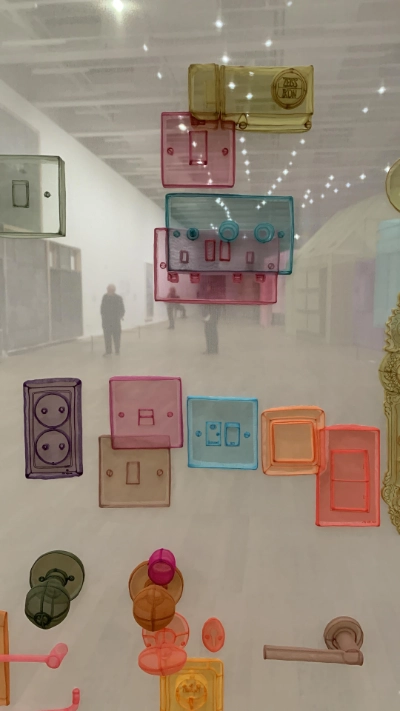
As such, the effective communication of these ideas is hardwired in the design of Epoch Walking Tours. For example, in a nod to the formal and iterative structure of research, each tour stop builds upon the previous stops' insights. Like a writer using weather to set the tone, or the artist Do Ho Suh’s use of subconscious touchpoints - light switches, door knobs, plugs, etc. - to generate a sense of home (see blog image), we describe the linear evolution of ideas in a facsimile of the research process.
Equally, to physically engage the lovely people on our tours with abstract topics we rely heavily on ‘free association’. This is the idea that you can take a given piece of the urban landscape and choose what story you tell about it. For example, we creatively use elements of statues, buildings and even the odd telephone box to “spark dialogue and foster understanding” (a key tour aim identified in the brilliant Saira Niazi’s Renegade Guide Handbook) of usually hard to access ideas.
So, if you’re interested in seeing maths and academia in a different light, or just love learning about something new, this is for you. Please check out our tours or get in touch directly ([email protected])!